Social Engineering Scams: A Growing National Threat
Social engineering campaigns have become a major national cybersecurity concern in 2025. The NCSOC has observed a surge in sophisticated social manipulation techniques targeting government institutions, financial services, and public networks. Unlike traditional malware or brute-force attacks, these threats exploit human trust - tricking individuals into revealing credentials, approving fake payments, or granting system access.
Prevalent Social Engineering Techniques
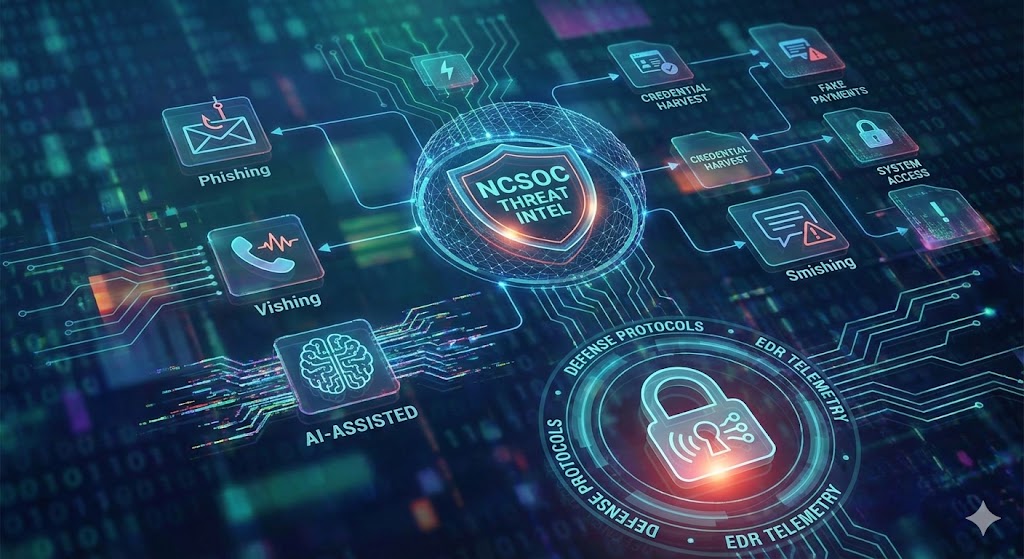
Attackers increasingly deploy phishing campaigns that imitate government or corporate systems to harvest credentials. Vishing and smishing use fake calls or text messages posing as emergency alerts or payment verifications. Other tactics include pretexting - creating false identities to gain trust - and baiting, where malicious attachments or download links are disguised as official documents or invoices.
Why Are These Attacks Escalating?
Remote operations, increasing digital workloads, and AI-assisted content generation have made scams more adaptive and convincing. The NCSOC Threat Intelligence Unit notes that attackers now use publicly available personal data to craft highly believable phishing messages. Combined with social media reconnaissance, these techniques create an illusion of authenticity that even experienced users may overlook.
NCSOC’s 2025 mid-year threat assessment recorded a steady increase in credential theft and business email compromise incidents linked to social engineering. Continuous employee training, simulated phishing exercises, and EDR telemetry monitoring are key to early detection and mitigation of such attacks.
- NCSOC Threat Intelligence Division
How to Stay Protected
Always verify requests for credentials or payments through secondary channels. Enable multi-factor authentication for all accounts. Avoid clicking on unsolicited links, and educate your teams regularly on identifying spoofed emails and urgent requests. NCSOC recommends continuous awareness training and simulated phishing campaigns for both public and private sector organizations.
Conclusion
Social engineering remains one of the most persistent national cybersecurity threats - exploiting human trust rather than technical vulnerabilities. Through proactive monitoring, awareness programs, and real-time SOC coordination, NCSOC continues to strengthen Sri Lanka’s defense posture against these evolving manipulation tactics.